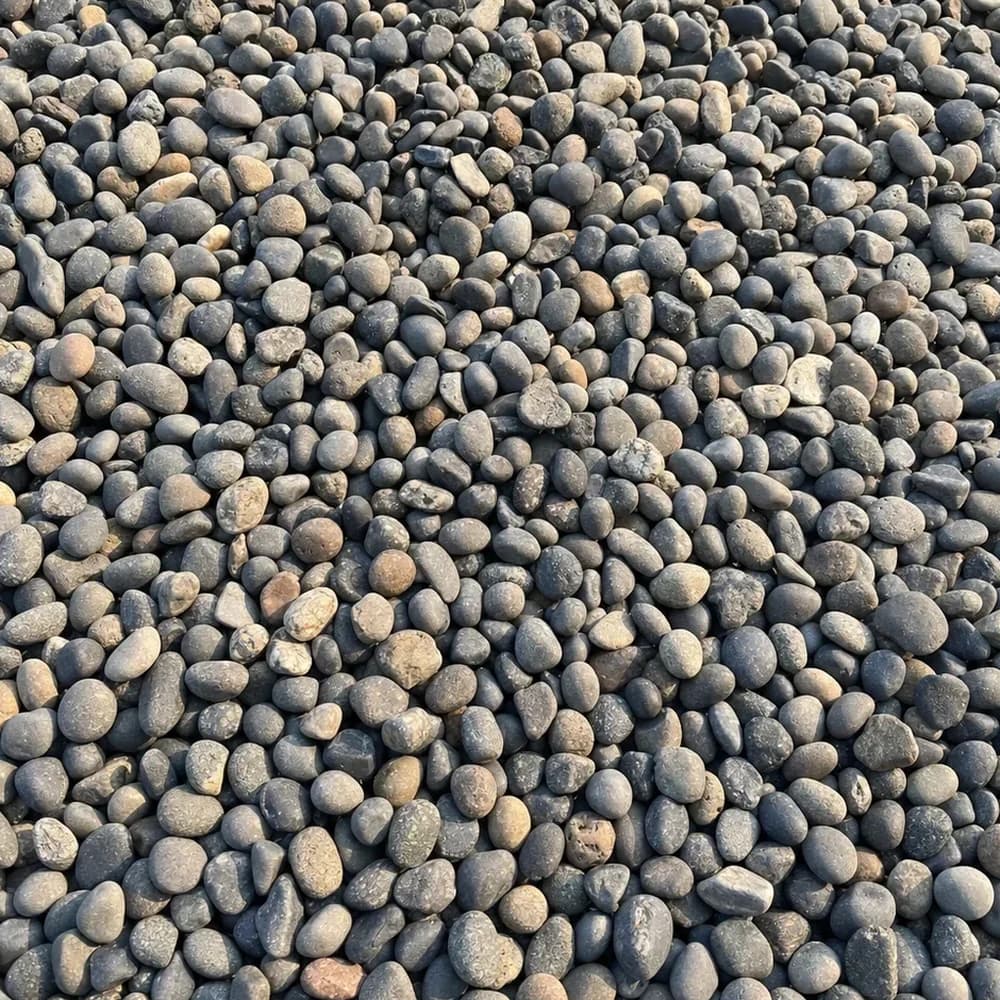
Pea gravel calculator for New Mexico
Find tonnage for fire pits, paths, patios, and play areas with 3/8 inch rounded stone.
Enter your project dimensions
Rounded pea gravel measures 3/8 inch and is roughly pea-sized. Though it feels gentle underfoot, it weighs 2,800 lb per cubic yard, or 1.4 tons, matching crushed gravel. Layer depth makes the difference: under 2 inches, soil may show; over 3 inches, it gives way under each step like dry beach sand. Use this calculator to convert dimensions into tons, with preset depths for the one exception to the 2 to 3 inch range: play areas.
Turn measurements into tons
- For square areas, multiply length by width; for a round fire-pit surround, measure the diameter.
- Use 2-3 inches for walked-on areas, or maintain 9-12 inches in playground fall zones.
- Divide cubic feet by 27 for cubic yards, then multiply yards by 1.4 for tons.
Material coverage
| Depth | 1 cubic yard covers | 1 ton covers |
|---|---|---|
| 2 inches | 162 sq ft | ≈ 116 sq ft |
| 3 inches | 108 sq ft | ≈ 77 sq ft |
| 4 inches | 81 sq ft | ≈ 58 sq ft |
| 12 inches, play area | 27 sq ft | ≈ 19 sq ft |
| Project | Typical size | Depth | Volume | Weight |
|---|---|---|---|---|
| Patio / seating area | 12 x 12 ft | 3" | 1.3 yd³ | 1.9 tons |
| Garden walkway | 25 x 3 ft | 2.5" | 0.6 yd³ | 0.8 tons |
| Fire-pit surround | 12 ft round | 3" | 1 yd³ | 1.5 tons |
| Playground fall zone | 20 x 20 ft | 12" | 14.8 yd³ | 20.7 tons |
| Dog run | 15 x 8 ft | 3" | 1.1 yd³ | 1.6 tons |
Edging keeps it contained
Because pea gravel is round, the stones roll. A border that is missing or has sunk allows gravel to spread. Steel, aluminum, timber or paver edging installed an inch above the surface helps hold it in place, while flush edging lets stones escape over time. On slopes above about 5%, rain and foot traffic can still carry gravel downhill. In monsoon-prone areas, keep loose stone out of the flow line. Use a honeycomb stabilizing grid beneath the gravel on slopes, or choose angular crushed stone that interlocks.
Pea gravel compared with crushed gravel and river rock
For smooth footing, pea gravel is a common pick, though it shifts around. Crushed walkway gravel has angular pieces that bind together and handle slopes, but feels sharper underfoot. Larger river rock is mainly decorative and better kept in landscape beds. Costs generally increase in that sequence. It is common to combine them: crushed gravel on a sloping side path, pea gravel at the fire pit, and river rock beside the foundation. Use the calculators here to compare tonnage for an identical footprint in about a minute.
Notes for common projects
- Patios: Start with 2 inches of compacted screenings to help keep chair legs from sinking, then spread 2 to 3 inches of pea gravel.
- Play areas: Keep 9 to 12 inches in the fall zone and consult the equipment manual. With 12 inches of depth, a ton reaches only about 19 square feet, so rely on the calculator rather than a rough guess.
- Fire pits: Plan for 3 inches. The stone does not burn, and rain can drain away from the seating area overnight.
- Dog runs: Use 2 to 3 inches. Rounded gravel is gentler on paws and easy to rinse clean.
- Walkways: Rake the surface flat twice a year, and every couple of seasons replenish the traffic line from a bucket or two you set aside.
Example: a 12-foot fire-pit circle
A circle measuring 12-foot across has 113 square feet. For 3 inches of depth: 113 x 0.25 = 28 cubic feet = 1.05 cubic yards, a little less than 1.5 tons. Order 1.5, then use the light extra layer on the high-traffic side next spring.
Pea gravel quantities and weight
How much pea gravel is needed?
What area will a ton of pea gravel cover?
What is the weight of a yard of pea gravel?
What does pea gravel cost?
What is pea gravel made of?
What depth is needed for a pea gravel patio?
How deep should pea gravel go below a swing set?
For a walkway, pea gravel or crushed gravel?
Other calculators
Most patios need under two tons.
3/8 inch natural pea gravel, sold by the ton with free delivery.