Gravel calculator for New Mexico
Calculate cubic yards and tons for gravel or landscape rock, choose the right item, and have it delivered free.
Enter your project dimensions
At a depth of 2 inches, 116 square feet takes about one ton of crushed gravel. Use this calculator to enter the area dimensions and depth, select the material, then view cubic yards, tons, and the delivered price. Landscape rock uses the same tool: crushed gravel, #57 stone, and similar products weigh close to 2,800 lb per cubic yard.
Calculate the gravel you need
- Take measurements in feet. For a rectangle, multiply length by width. For a circle, enter the diameter. Treat an L-shaped driveway as two rectangles, then use multiple-areas mode to combine them.
- Set the depth in inches. Use 2-3 inches for paths and refreshes. For a new driveway, install 4-6 inches in two layers instead of one pour.
- Calculate cubic feet by multiplying area by depth in feet. Divide that by 27 for cubic yards, then use 1.4 to find tons.
Tons = cubic yards × 1.4 (crushed gravel at ~2,800 lb per cubic yard)
Useful weight and coverage figures
Dry crushed gravel comes in at about 2,800 lb per cubic yard, equal to 1.4 tons. One ton therefore equals about 0.71 cubic yards. As depth increases, coverage drops quickly:
| Depth | 1 cubic yard covers | 1 ton covers |
|---|---|---|
| 2 inches | 162 sq ft | ≈ 116 sq ft |
| 3 inches | 108 sq ft | ≈ 77 sq ft |
| 4 inches | 81 sq ft | ≈ 58 sq ft |
| 6 inches | 54 sq ft | ≈ 39 sq ft |
| Material | Weight per cubic yard | Tons per yard |
|---|---|---|
| Driveway / walkway gravel | ≈ 2,800 lb | 1.40 |
| Pea gravel (3/8") | ≈ 2,800 lb | 1.40 |
| Crushed stone (#57, 3/4") | ≈ 2,800 lb | 1.40 |
| Crusher run / road base | ≈ 3,000 lb | 1.50 |
| River rock (1-3") | ≈ 2,700 lb | 1.35 |
Project depth guide
- Garden paths and walkways: 2-3 inches of walkway gravel over compacted ground or fabric.
- Existing driveway refresh: add 2 inches of surface gravel.
- Start a new driveway with 3-4 inches of compacted crusher run, followed by 2-3 inches of driveway gravel or #57. The bottom layer supports traffic, and the finish layer drains water and completes the surface.
- Patios and seating areas: place 2-3 inches within solid edging.
- For French drains and wet ground, use 12 inches or more of clean stone. Calculate these with the Stone Calculator because drainage needs washed rock with no fines.
Example calculation: a 50 x 10 ft driveway
At 4 inches deep, 500 square feet comes to 500 x 0.333 = 167 cubic feet. Dividing by 27 gives 6.2 cubic yards, or 8.7 tons. Allow 5% for compaction, then plan on about 9 tons. Use roughly a 60/40 split of crusher run base and surface gravel. That layered approach matters, especially where monsoon runoff needs a graded base. Measuring a driveway to the inch does not make a single 2-inch layer placed directly on dirt a suitable plan.
Common projects, already calculated
Estimate before measuring, using 1.4 tons per cubic yard:
| Project | Typical size | Depth | Volume | Weight |
|---|---|---|---|---|
| Single-car driveway pad | 20 x 10 ft | 4" | 2.5 yd³ | 3.5 tons |
| Two-car driveway | 24 x 20 ft | 4" | 5.9 yd³ | 8.3 tons |
| Country driveway | 50 x 12 ft | 6" | 11.1 yd³ | 15.6 tons |
| Garden path | 20 x 3 ft | 3" | 0.6 yd³ | 0.8 tons |
| Patio seating area | 12 x 12 ft | 3" | 1.3 yd³ | 1.9 tons |
| Shed base | 10 x 12 ft | 4" | 1.5 yd³ | 2.1 tons |
Four errors that lead to another delivery
- Leaving out the base on a new driveway. Gravel placed straight on soil can rut within a season. Install the base layer before the top layer.
- Comparing bids by area only. For the same 20 x 10 pad, depth alone can change two quotes, so compare equal tons.
- Avoid a layer under 2 inches. By spring, One inch of gravel may sink into mud.
- Leaving the surface flat. Water pools without a crown, while a 2% slope drains it and holds fines in place.
Match gravel to the surface
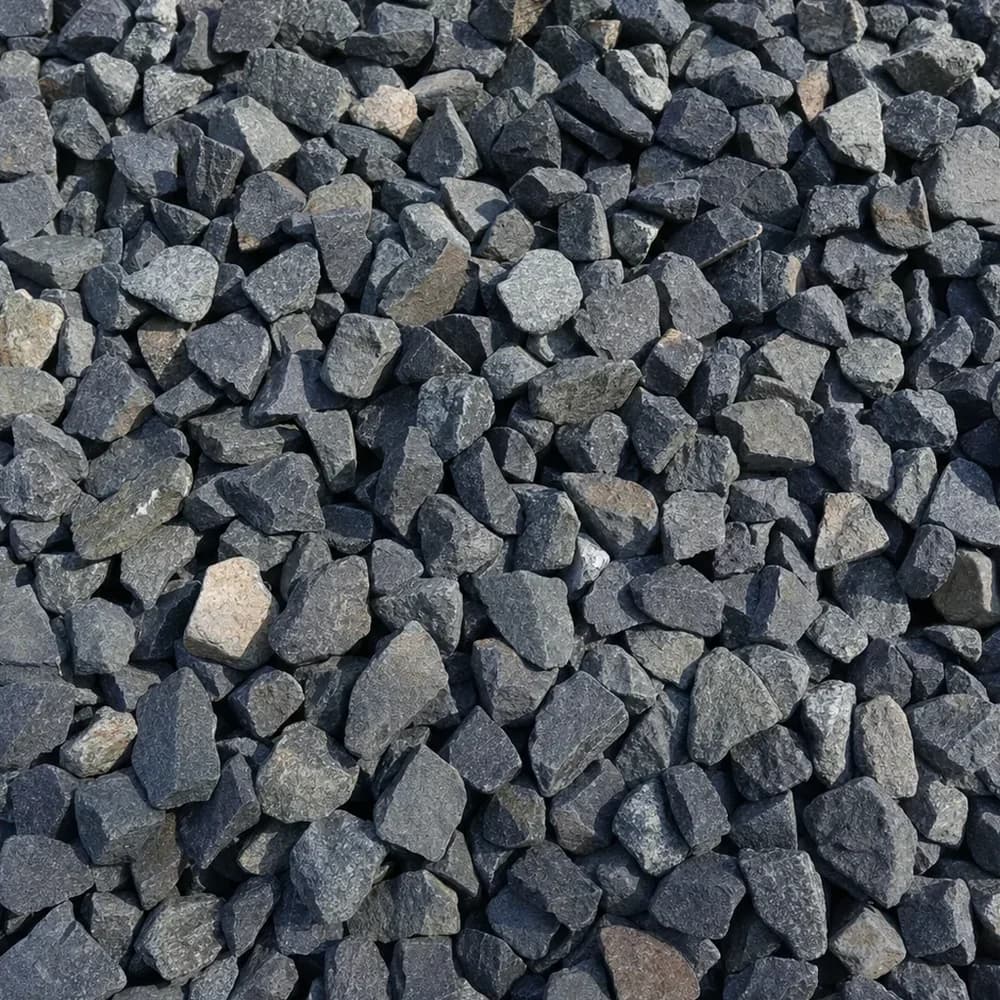
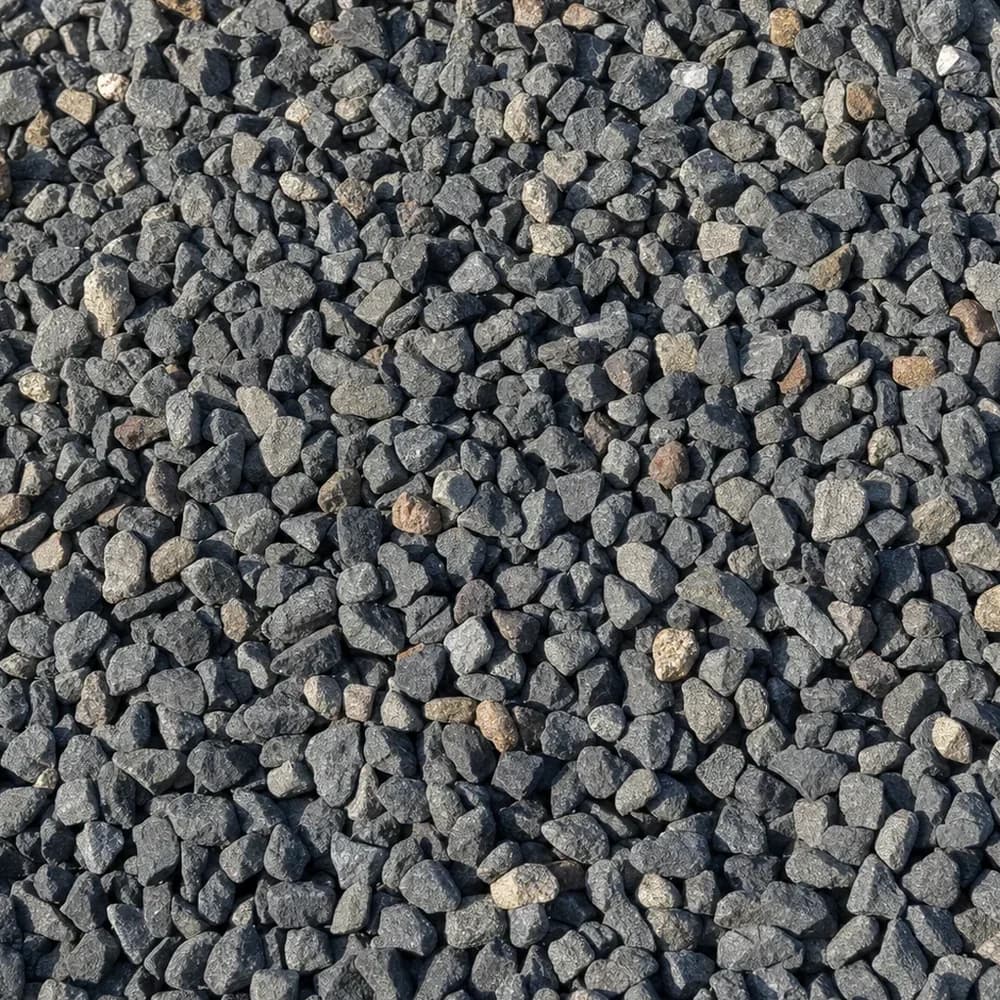
Use angular crushed gravel where vehicles travel because the pieces interlock under pressure. Round material, including pea gravel and river rock, shifts and rolls when loaded, making it better for walkways and landscape beds. A durable driveway uses a compactable layer below, such as crusher run or road base, with a draining top layer like driveway gravel or #57. Not sure which material you have, or choosing between options? Text a photo to (505) 240-8790 for help identifying it.
How gravel is measured and sold
The same material can be described in three units. Cubic yards show volume. A ton is 2,000 lb of weight, or about 0.71 yards of gravel. Load size depends on the vehicle: 8-10 yards for a single-axle dump truck and 12-16 yards (17-22 tons) for a tandem. Put all quotes into tons before comparing them. Compare delivered prices, not just material prices. Hauling often accounts for half the aggregate cost. With free delivery on every order, the displayed per-ton price is the price delivered to your driveway.
Measure irregular driveways
Curved drives and turnarounds need a different approach. Measure a curved lane along its centerline, then use the average width. For a round turnaround bulb, use the widest point as the diameter. On slopes, make the base deeper at the lower end, where runoff and gravel collect. If measuring gets difficult, separate the layout into rectangles and total it in multiple-areas mode. In monsoon areas, keep loose material out of the flow line.
Plan the delivery
- Choose the drop location before the truck arrives. Use firm ground and avoid low wires or septic field crossings.
- Have the load placed near the project area. One yard means 9 to 14 wheelbarrow loads, and an added 10 feet becomes noticeable across 6 yards.
- For pavement you want to protect, spread a tarp before tipping. It can cut cleanup from an afternoon to ten minutes.
- Pack the base course before placing the surface course. Rent a plate compactor, or use truck tires if needed.
Gravel answers by the numbers
What does 1 ton of gravel cover?
How can I calculate gravel quantity?
How much gravel covers a 10x10 area?
How many gravel yards make a ton?
What is a gravel truckload?
What is the cost of a gravel yard?
Do I need extra material for compaction?
Can gravel go directly over grass?
Other calculators
That tonnage is delivered free.
Driveway gravel, #57, and crusher run are sold by the ton and delivered throughout New Mexico.